
· Daniel · Maintenance · 7 min read
Can I Use 3 In 1 Oil For Bike Chain? (Explained)
Have you ever wondered if you can simply use 3-in-1 oil to lubricate your bike chain? After all, 3-in-1 oil is readily available at any hardware store and far more affordable than specialty bicycle lubes.
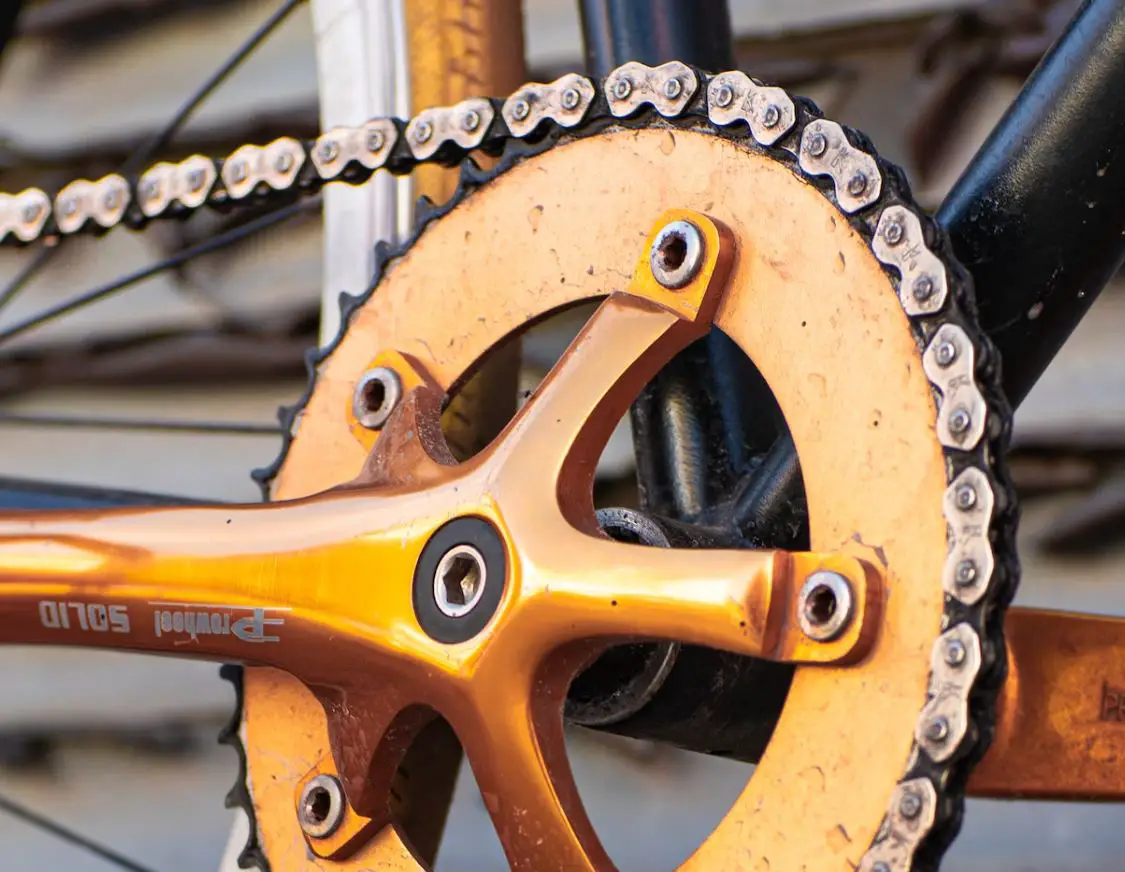
Have you ever wondered if you can simply use 3-in-1 oil to lubricate your bike chain?
After all, 3-in-1 oil is readily available at any hardware store and far more affordable than specialty bicycle lubes.
But is it a good substitute or should you use dedicated bike chain lubricants?
You can use 3 in 1 oil for bike chains, but it’s not the ideal choice.
In this article, I’ll go over the pros and cons of 3-in-1 oil, examining its lubricating properties, longevity, messiness, weather-resistance, and potential to leave residues.
Plus, you’ll also learn how bike-specific wet lubes and dry lubes differ from standard multi-purpose oils.
Is 3 In 1 Oil Good For Bike Chains?
Yes, 3-in-1 oil can be used for lubricating bike chains and it is ok, but there are better options available.
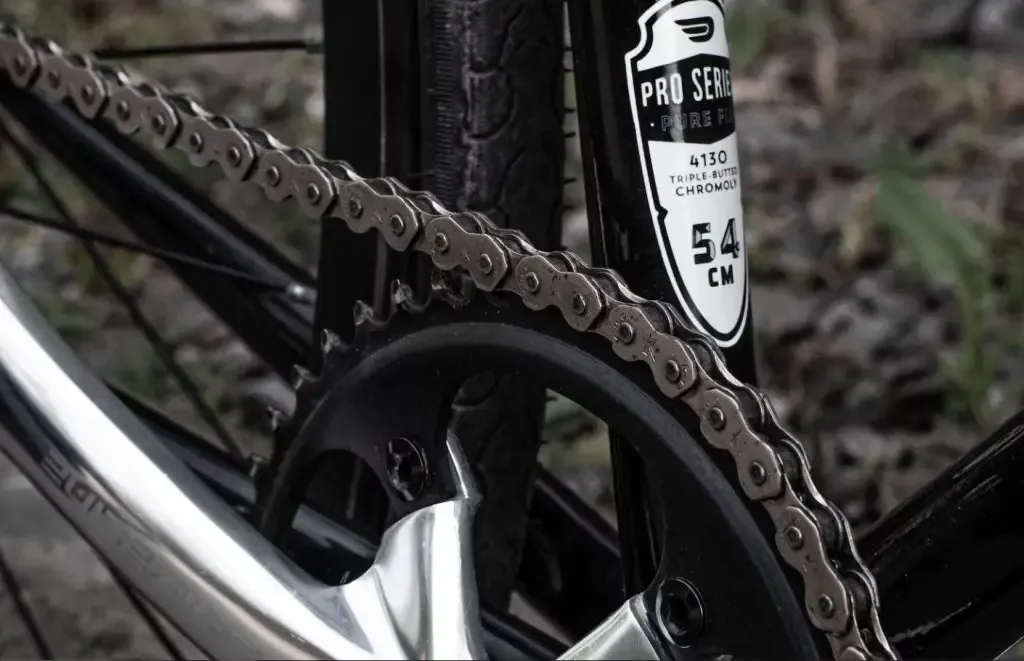
3-in-1 oil is a multi-purpose household oil that’s primarily used for general lubrication, rust prevention, and light-duty applications.
It can work to some extent for bike chains, and there are people who have been using it for years without any problem.
Unless you are a racer and are dead serious on performance, 3-in-1 is good for your chain.
3 In 1 Oil Vs Bike Chain Lube
| Feature | 3-in-1 Oil | Bike Chain Lube |
|---|---|---|
| Cost | Affordable and easy to find | Typically more expensive |
| Application | Easy to apply drops to chain | Similar application process |
| Cleaning Ability | Cleans chain as it lubricates | Not as effective at cleaning grime compared to bike degreaser |
| Lubrication | Not as long-lasting, may require frequent reapplication | Designed to lubricate bike chains for longer |
| Friction Reduction | Not as efficient at reducing friction | Formulated to minimize friction from bike pedaling |
| Weather Resistance | Not as resistant to wash out from wet conditions | Wet lubes designed for rain; wax lubes repel moisture |
| Dirt Resistance | Can attract more dirt without frequent reapplication | Does not attract as much dirt and dust |
| Drying Time | Can get sticky and gummy when drying | Leaves behind graphite/wax so lasts when oil dries |
| Multi-purpose | Can be used on other bike parts | Made specifically for bike chains |
Pros Of Using 3-in-1 Oil For Bike Chains
Let’s take a look at the pros first:
Readily Available and Affordable
3-in-1 oil is readily available and it only costs a fraction of what most dedicated bike lubes do.
You can easily purchase it at hardware stores, auto parts stores, and even grocery stores typically for around $5-10 per medium sized bottle.
This makes it extremely convenient to pick up unlike hunting down bike-specific lubes that may only be found at bike shops or specialty online retailers.
For the casual cyclist, 3-in-1 oil provides an accessible and budget-friendly lubrication option.
Cleans and Lubricates
Another advantage of using 3-in-1 oil is that it cleans dirty bike chains while simultaneously lubricating them.
As you apply the oil to a chain covered in gunk, grime, dirt and contaminants, the oil helps dissolve and displace all the built-up debris.
At the same time, the oil spreads into all the inner rollers and pins of the chain to reduce metal-on-metal friction.
This two-in-one cleaning and lubricating effect saves you time and effort compared to having to degrease the chain and then separately apply lubricant afterwards.
The light viscosity oil is able to deeply penetrate into crevices that thicker grease lubricants may not reach.
Multi-Purpose Oil
In addition to lubricating chains, 3-in-1 oil can provide general protection from rust on other metal bike parts such as brake and derailleur pivots, cables, and other components.
A couple drops can also stop annoying squeaky noises coming from bike brakes, suspension joints, or other moving parts.
Having one multi-use oil product reduces clutter and simplifies bike maintenance compared to using an array of specialty lubricants for each specific task.
Cons of Using 3-in-1 Oil on Bike Chains
Not As Long-Lasting As Bike-Specific Lubes
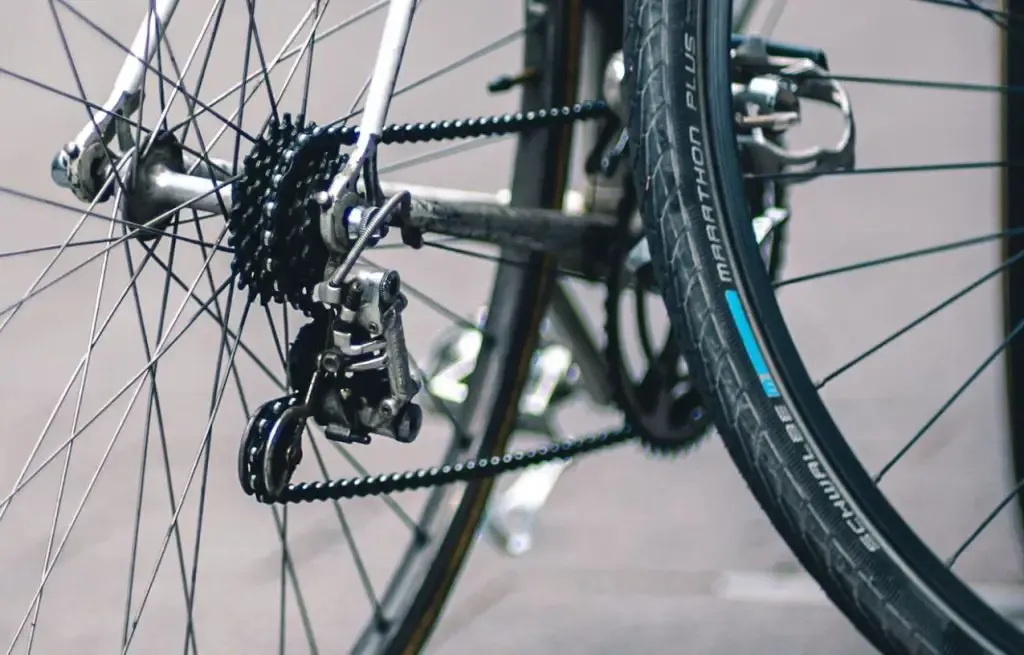
While 3-in-1 oil provides decent lubrication, specialized bicycle chain lubes are engineered to last longer under cycling conditions.
The formulas contain special tackifiers, friction modifiers, and viscosity agents designed to adhere and resist wearing off from the pressure, vibration, and flexing forces on a chain.
3-in-1 oil has more basic lubricating properties that typically wear off more quickly, especially in wet or dusty conditions.
Attracts More Dirt and Grime
Another downside of 3-in-1 oil is its tendency to attract dirt, dust, and other contaminants.
This can lead to a grimy, gritty buildup that coats the exterior of the chain and clumps up in between the rollers.
Bike chain lubes contain tackifiers that help the lubricant adhere to the metal better, resisting the attraction and adhesion of debris while riding.
Not as Weather-Resistant as Bike Wet Lubes
3-in-1 oil provides minimal protection when riding in wet weather.
It can easily wash away in rain and with most of the oil rinsed off, this leaves the chain susceptible to insufficient lubrication and accelerated wear.
Bike wet lubes are designed to specifically resist water and rain.
Can Dry Out and Become Gummy
Lastly, as 3-in-1 oil starts drying out, the remaining residue can become sticky and tacky with a gummy-like texture that grabs onto dirt and grime.
This gummy buildup leads to a gritty, suboptimal chain that will require thorough cleaning.
Bike lubes minimize this issue by drying into a thinner, wax-like coating.
3 in 1 Oil vs WD40 For Bike Chains
Here’s a quick comparison of the two:
| Feature | 3-in-1 Oil | WD-40 |
|---|---|---|
| Purpose | Multi-purpose lubricating oil | Multi-use water displacer and solvent |
| Base | Mineral oil and additives | Light hydrocarbon |
| Lubricating Ability | Decent, but not optimized for bikes | Very poor lubrication |
| Wear Protection | Some protection against rust and corrosion | Minimal protection against wear |
| Cleaning Power | Moderate ability to clean grime | Powerful cleaner and degreaser |
| Water Resistance | Low, will wash off in wetness | Displaces moisture but does not resist washout |
| Duration | Short-lived lubrication, needs frequent reapplication | Extremely short-lived, evaporates quickly |
| Build-up | Can leave gummy/sticky residue | Leaves no residue |
| Price | Budget-friendly at around $5 per bottle | Similarly inexpensive around $5-10 per can |
| Specialty Use | Safe for general household use | Electronics cleaner, door hinge lubricant |
How to Apply 3-in-1 Oil to Your Bike Chain
Step-by-Step Application Guide
- Clean the chain first - Remove dirt and old lubricant with a degreaser
- Dry the chain completely - Wipe with a clean rag to remove moisture
- Apply oil sparingly - Put a few drops on each chain link (don’t over-apply)
- Work the oil in - Pedal backwards to distribute oil throughout the chain
- Wipe off excess - Use a rag to remove any excess oil from the outside of the chain
- Let it sit - Allow 10-15 minutes for the oil to penetrate before riding
Frequency: Apply every 100-200 miles or after wet rides. More frequent application may be needed in dusty or wet conditions.
Application Tips
- Less is more - Too much oil attracts dirt and creates a messy chain
- Focus on rollers - The oil needs to get inside the chain rollers, not just on the outside
- Clean regularly - 3-in-1 oil attracts dirt, so clean your chain more frequently
- Reapply after washing - Water will wash away the oil, so reapply after cleaning your bike
Comparison with Other Chain Lubricants
3-in-1 Oil vs Chain Wax
| Feature | 3-in-1 Oil | Chain Wax |
|---|---|---|
| Application | Easy, liquid form | Requires heating/melting |
| Durability | Short-lived (100-200 miles) | Long-lasting (300-500 miles) |
| Dirt Attraction | High | Low |
| Water Resistance | Poor | Excellent |
| Cost | $5-10 per bottle | $15-25 per container |
| Best For | Casual riders, budget option | Serious cyclists, wet conditions |
3-in-1 Oil vs Dry Lube
| Feature | 3-in-1 Oil | Dry Lube |
|---|---|---|
| Dirt Attraction | High | Low |
| Durability | Short | Medium (200-300 miles) |
| Application | Easy | Easy (spray or drip) |
| Best Conditions | Dry conditions | Dry, dusty conditions |
| Cost | $5-10 | $10-20 |
Long-Term Effects on Chain Wear
Using 3-in-1 oil long-term can have both positive and negative effects:
Positive Effects
- Prevents rust - The oil provides basic rust protection
- Reduces friction - Basic lubrication reduces metal-on-metal contact
- Affordable maintenance - Low cost allows for frequent application
Negative Effects
- Attracts dirt - Dirt buildup can accelerate chain wear
- Gummy residue - Sticky buildup can trap particles that act as abrasives
- Frequent cleaning needed - More maintenance required to prevent wear
- May not penetrate as well - Bike-specific lubes are formulated to penetrate chain internals better
Verdict: For casual riders putting 500-1,000 miles per year, 3-in-1 oil is acceptable. For serious cyclists or high-mileage riders (2,000+ miles/year), dedicated bike chain lube will provide better protection and longer chain life.
Bottom Line
3-in-1 oil can work for bike chains, especially for casual riders on a budget. It provides basic lubrication and rust protection at a fraction of the cost of dedicated bike lubes.
However, it requires more frequent application, attracts more dirt, and may not provide the same level of protection as bike-specific lubricants.
Recommendation: Use 3-in-1 oil if you’re a casual rider on a tight budget. For serious cycling, wet conditions, or high-mileage riding, invest in proper bike chain lube for better performance and chain longevity.
Frequently Asked Questions
How often should I apply 3-in-1 oil to my bike chain?
Apply 3-in-1 oil every 100-200 miles or after wet rides. Since it doesn't last as long as bike-specific lubes, you'll need to apply it more frequently. In dusty conditions, you may need to clean and reapply every 50-100 miles.
Can 3-in-1 oil damage my bike chain?
3-in-1 oil won't directly damage your chain, but it can accelerate wear by attracting dirt and creating a gritty buildup. The sticky residue can trap particles that act as abrasives. Regular cleaning is essential when using 3-in-1 oil to prevent excessive wear.
Is 3-in-1 oil better than WD-40 for bike chains?
Yes, 3-in-1 oil is better than WD-40 for bike chains. WD-40 is primarily a water displacer and cleaner, not a lubricant. It evaporates quickly and provides minimal lubrication. 3-in-1 oil provides actual lubrication, though it's still not as good as dedicated bike chain lube.
Can I use 3-in-1 oil on other bike parts?
Yes, 3-in-1 oil can be used on other bike parts like brake pivots, derailleur pivots, and cable housings. However, avoid using it on brake pads, rotors, or rims as it can contaminate braking surfaces and cause dangerous brake failure.
How do I clean 3-in-1 oil buildup from my chain?
To clean 3-in-1 oil buildup, use a bike-specific degreaser or citrus-based cleaner. Apply degreaser, scrub with a brush, rinse with water, and dry thoroughly. For heavy buildup, you may need to soak the chain or use a chain cleaning tool. Reapply lubricant after cleaning.
Will 3-in-1 oil work in wet conditions?
3-in-1 oil has poor water resistance and will wash off quickly in wet conditions. You'll need to reapply after every wet ride. For regular wet-weather riding, use a dedicated wet lube or chain wax, which are designed to resist water and provide better protection.
Is 3-in-1 oil safe for carbon fiber bike parts?
3-in-1 oil is generally safe for carbon fiber, but avoid getting it on carbon fiber surfaces as it can be difficult to remove and may leave residue. When applying to chains on carbon bikes, be careful not to drip oil on the frame.
How does 3-in-1 oil compare to expensive bike chain lubes?
Expensive bike chain lubes ($15-30) offer better performance: longer-lasting lubrication (300-500 miles vs 100-200), better water resistance, less dirt attraction, and better chain penetration. However, 3-in-1 oil provides 70-80% of the performance at 20-30% of the cost, making it a good budget option for casual riders.